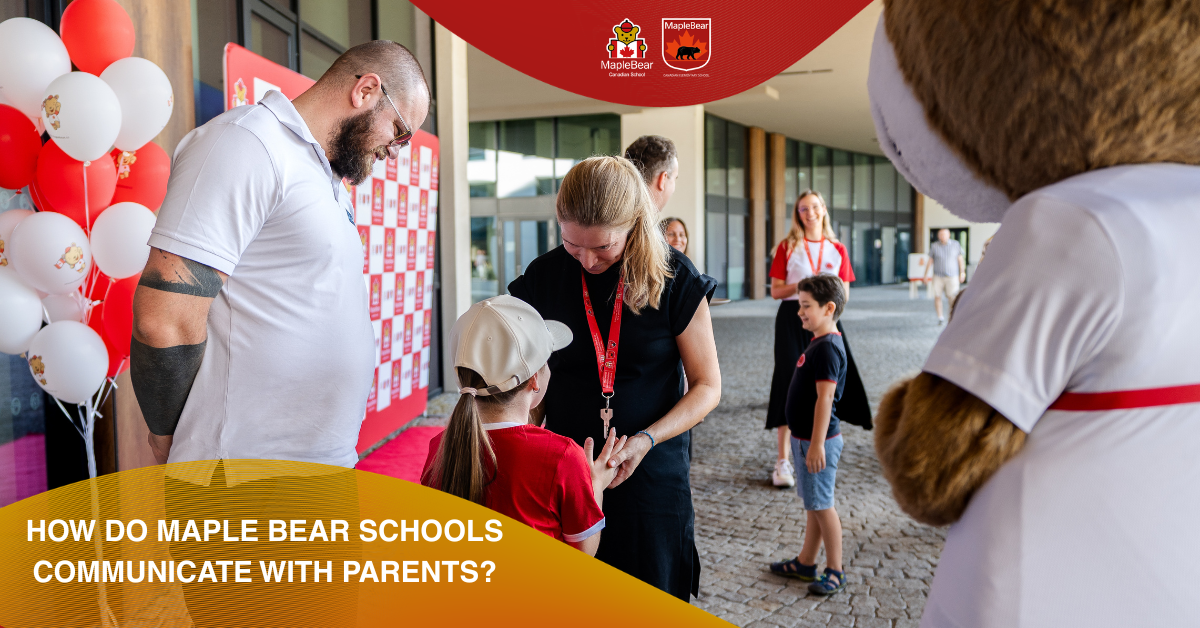
Quality education happens both inside and outside the classroom. Open communication between school and family, mutual trust, and a shared goal are all essential to supporting every child’s development, independence, and love of learning. At Maple Bear Olomouc, we see parents as important partners in education. We believe that collaboration between families and educators creates an environment where children feel safe, develop their abilities, and gradually take responsibility for their own learning.
Parents as Partners in Education
Every child comes to school with their own experiences, personality, interests, and needs. Parents know their children better than anyone, which makes their perspective invaluable to us. We also want parents to understand how their children are doing at school, what they are discovering, and how they are progressing.
We believe in open, respectful, two-way communication. We consider feedback from parents an important source of insight that helps us better understand their children’s needs and their families’ expectations. We actively welcome this feedback and see it as an opportunity to continually improve our school. Our goal is not simply to share information, but to build relationships based on trust, mutual respect, and shared responsibility for each child’s education.
Kinderpedia: School Communication in One Place
Our online platform, Kinderpedia, makes everyday communication between school and family easier. It serves as an important communication channel, giving parents access to the latest school news as well as practical updates and organisational information.
Through Kinderpedia, we can share school news, photos, and information about activities, send important announcements, and keep parents informed about what their children experience throughout the day. The platform also makes it easier for families and the school team to stay connected. However, digital communication is not a substitute for personal contact. We see it as a tool that complements our day-to-day collaboration and makes communication clearer and more accessible.
What Are Tripartite Meetings, and Why Are They an Important Part of Learning?
One way we bring school, parents, and children together is through tripartite meetings – individual meetings involving the teacher, parent, and student. Unlike traditional parent-teacher meetings, where the teacher informs parents about a child’s progress and behaviour, tripartite meetings give the student an important voice in the conversation.
The child becomes an active participant in discussions about their own learning. Together with their teacher and parent, they reflect on what they have learned, what they are doing well, what they enjoy, and which areas they would like to develop further. A meeting might include presenting their own work, projects, or portfolio, celebrating achievements, and discussing challenges they encounter along the way. The teacher contributes their professional perspective, the parent shares insights from home, and the child has the opportunity to express their own views. Together, they explore how best to support the child’s continued development.
Tripartite meetings are therefore much more than an opportunity to share assessments. They create space for dialogue, active listening, and planning the next steps together.
Self-Assessment: A Skill We Develop from an Early Age
To take an active role in their education, children need to gradually learn to understand themselves – their abilities, emotions, achievements, and the areas in which they need support. That is why we encourage self-assessment from an early age. Questions such as What went well for me today? What did I find challenging? What new thing did I learn? What would I like to try differently next time? become a natural part of everyday learning.
For younger children, this might involve sharing their experiences, choosing a piece of work they are proud of, or talking with their teacher about something they have achieved. As they grow older, children gradually become better able to identify their own progress, reflect on their learning, and set goals for themselves.
This approach supports not only independence and self-confidence, but also the ability to accept feedback, reflect on personal decisions, and see mistakes as a natural part of the learning process. We want children to recognise their own efforts, understand what helps them learn, and feel comfortable asking for help when they need it.
One Shared Goal: Helping Children Grow into Successful Individuals
For us, communication between school and family means much more than sharing information about school life. It is the foundation for mutual understanding and collaboration in every child’s education and development. It is an ongoing process built on trust, a willingness to listen, and respect for each child’s needs.
At Maple Bear Olomouc, we want parents to know that their perspectives matter, their feedback is taken seriously, and their partnership is important to us. At the same time, we create opportunities for children to become increasingly active participants in their own education and learn to reflect on how they are progressing.
Because when school, family, and child work together towards a shared goal, they create the best possible conditions for learning, personal growth, and healthy self-confidence.